
What Independent Beauty Pros Need to Know Before the Next New Client Searches
A new client decides whether to book you long before she sees your website. She types “balayage near me,” scans the three map results at the top, and taps the one with recent photos and real reviews. That map pack is your Google Business Profile, the most valuable piece of local SEO real estate an independent artist will ever own. Whether you rent a Lewisville salon suite or a studio in Fort Worth, that listing puts your chair in front of people searching within a few miles of it. Set it up properly and local search does your prospecting for you.
Why Your Google Business Profile Outranks Your Website
Google places the map pack above organic results for nearly every beauty search with local intent. Three listings. That is the entire competition, and you hold an advantage the chains do not: one artist, one specialty, one verified address. A website can sit on page two all year while a well kept Google Business Profile quietly collects calls every week.
Step 1: Claim Your Google Business Profile at Your Studio Address
Use your studio address and include your suite number. Google verifies businesses by physical location, and proximity to the searcher is one of the three factors it publishes, alongside relevance and prominence. A colorist working from a Lewisville salon suite at The Realm on State Highway 121 already sits inside the search radius for Castle Hills, The Colony, and Frisco.
The suite number matters more than people expect. Several artists in one building can all rank, and the unit keeps your listing distinct from your neighbor’s. Verify first, because an unverified listing does not appear in local search at all. The Near Southside and Castle Hills studio locations at Cachet Salons & Spa each reach a different pocket of DFW.
Step 2: Choose Categories the Way Clients Actually Search
Your primary category carries more ranking weight than any other field on your Google Business Profile. Choose the one that matches your highest value service, not the broadest one. An extension specialist should select Hair Extension Technician instead of Hair Salon. Add secondary categories for everything else on the menu.
Then fill the services section with real offerings and prices. Google uses those entries to match you against long tail searches like “keratin smoothing Castle Hills,” which convert far better than generic ones.
Step 3: Write a Description Clients Recognize Themselves In
You get 750 characters. Spend them on your specialty, your training, and the client you serve best. Cramming the field with repeated phrases will not move you up, since local SEO now rewards clarity over repetition. Only the first 250 characters show before the More link, so front load the specialty.
Name your neighborhood once. Mention parking if it is easy, because that detail closes more first appointments than stylists realize.
Step 4: Photograph the Room, Not Just the Hair
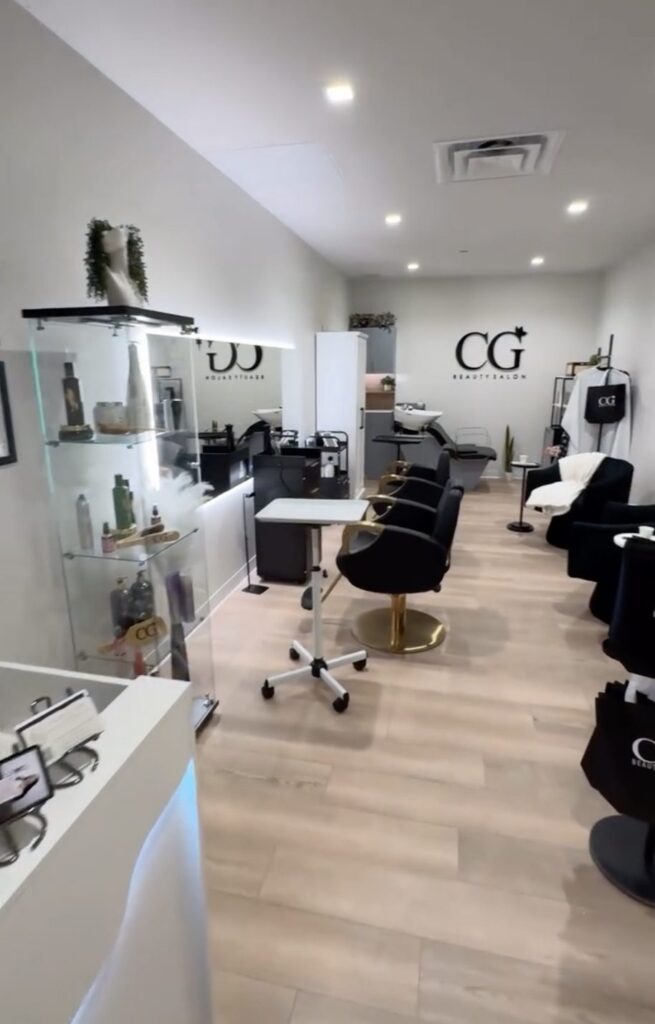
Add exterior shots before a single before and after. A first time client scrolling your Google Business Profile is quietly asking whether she will feel comfortable walking into the building, and a photo of the entrance answers that before she calls. Then add your interior, your retail shelf, and your work. Upload something new every month. Recency is a signal in local search, and a profile that has not changed since 2023 reads as abandoned.
Step 5: Build a Review Habit Instead of a Review Campaign
Reviews are the strongest lever independents leave alone, and consistency beats volume. Ask two clients a day at checkout, then text them the link on the spot. Twenty reviews across a year outperform fifty collected in one frantic week, which Google discounts.
Reply to every review, including the difficult ones. Responses get indexed, they show the next reader how you handle friction, and they keep the listing active in local search.
Step 6: Post Weekly and Feed the AI That Answers For You
Publish one short update a week. A new color placement, a Thursday opening, a retail arrival. What’s New posts expire after seven days, so weekly is the real target, and profiles that go quiet for a month have reported measurable drops in impressions.
Google now cross references your website service descriptions against the Services tab on your listing, and the AI grounds its answers on both. Answer these in plain sight on your site:
- Where do I park, and is it free?
- How far ahead should I book a color correction?
- What’s included with highlights?
Google Business Profile Questions Salon Suite Renters Ask
What happens to my reviews if I move studios?
They move with you. Edit the address on your existing listing instead of starting a new one, and your reviews, photos, and ranking equity stay intact.
My old salon owner created a listing with my name on it. Now what?
Submit a request for ownership through that listing. If the current owner does not respond within three days, Google usually lets you claim it yourself once you verify your affiliation.
Should my main button be a call or a booking link?
Use a booking link if your software integrates cleanly, and a phone number if it does not. A broken link costs more bookings than no link.
Do I need a second listing if I work two days somewhere else?
Only if you keep regular staffed hours there. Two thin listings compete and both lose.
Build Your Business Somewhere Worth Photographing
A strong listing still has to point somewhere real. Cachet gives independent artists a studio worth showing off, with adjustable LED lighting tuned for accurate color work, free covered parking, and a 24/7 security guard at The Realm in Castle Hills. Call (844) 222-4381 to set up a tour, or message us on Instagram at @cachetsalons.castlehills.


